Choosing new flooring is usually the exciting part of a renovation. Homeowners compare colors, plank widths, textures, finishes, and materials while imagining how the completed room will look. What receives far less attention is the surface underneath that new flooring.
Yet the condition of the subfloor can have a major influence on how the finished floor looks, feels, and performs. A beautiful flooring product installed over an uneven, damaged, damp, or poorly prepared surface may develop problems that have little to do with the flooring itself.
That is why subfloor preparation is an important part of many flooring projects. Once the existing material is removed, installers can evaluate what is underneath and determine whether additional work is needed before the new floor goes down.
What Installers May Find Under Existing Flooring
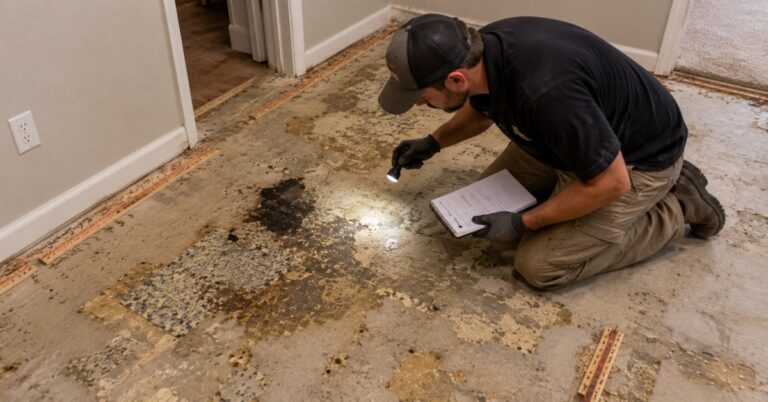
A subfloor can look perfectly acceptable from above while still hiding conditions that affect a new installation. Carpet, tile, laminate, vinyl, and other materials can conceal low spots, damaged areas, old adhesive, moisture staining, cracks, or previous repairs.
Professional subfloor preparation allows these conditions to be addressed before they interfere with the finished surface. The amount of preparation required varies significantly from one home to another.
In some rooms, removing the old material reveals a relatively clean and flat surface that needs only minor work. In others, installers may find conditions that require additional labor, materials, or drying time.
Uneven or Unlevel Areas
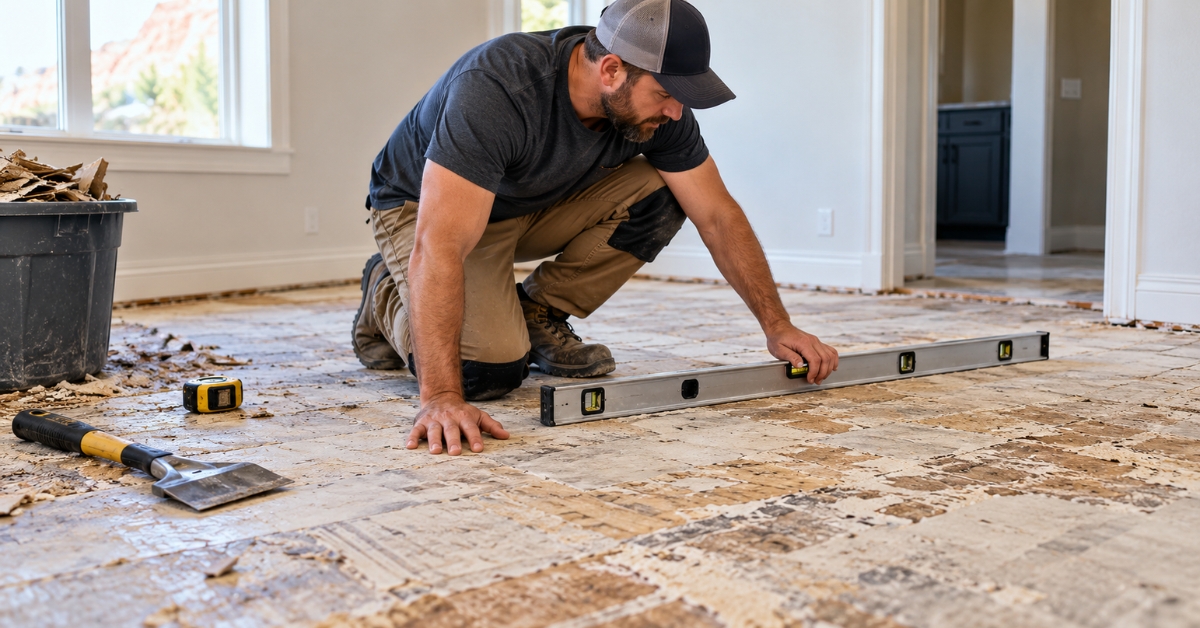
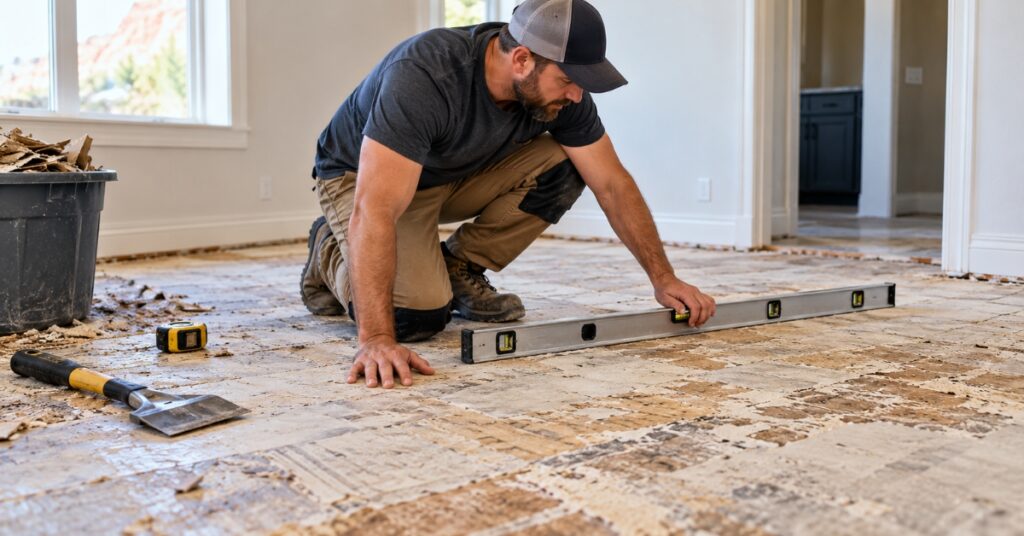
One of the most common issues is a surface that is not sufficiently flat for the selected flooring.
A floor does not necessarily need to be perfectly level from one end of the room to the other. However, it often needs to meet specific flatness tolerances established for the flooring product being installed.
Low spots, ridges, humps, and abrupt changes in height can cause problems with rigid flooring materials. Depending on the product and installation method, an uneven surface may contribute to movement, gaps, hollow areas, or stress at flooring joints.
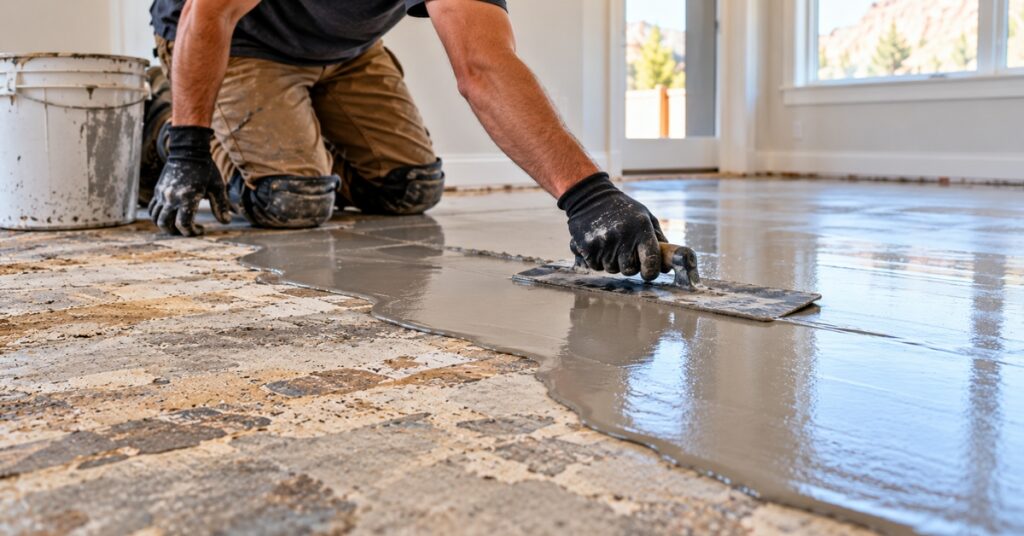
Floor leveling products, grinding, patching, or other corrective methods may be used depending on the condition of the substrate.
Why Flooring Removal Is an Important Stage
The true scope of preparation is often difficult to determine until the existing floor is gone.
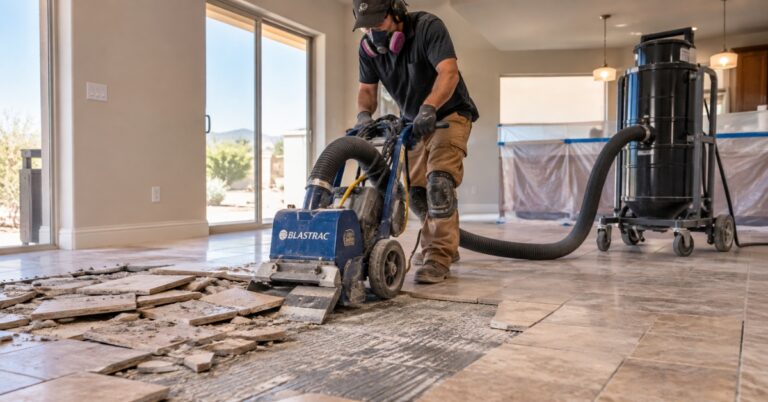
Professional flooring removal does more than clear space for new material. It exposes the surface installers actually need to work with.
For example, removing tile may reveal mortar or thinset that needs to be mechanically removed or smoothed. Pulling up glued flooring can expose layers of flooring adhesive. Carpet removal may uncover damaged tack-strip areas, stains, cracks, or variations in the concrete or wood substrate.
This is one reason estimates made before demolition may include allowances or explain that certain preparation costs cannot be confirmed until the existing floor has been removed.
Old Adhesive and Residue
Adhesive residue can be particularly important when replacing older flooring.
Depending on the material and installation method, leftover flooring adhesive may create an irregular surface or interfere with the bond of the new flooring system. Simply covering the residue is not always appropriate.
Installers may need to scrape, grind, encapsulate, or otherwise prepare the area according to the requirements of the new flooring and adhesive system. The appropriate approach depends on the existing material, substrate, and manufacturer specifications.
Older materials can also require additional caution. If there is any reason to suspect that an older flooring product or adhesive contains hazardous materials, testing or specialized handling may be appropriate before disturbance or removal.
Moisture Can Change the Installation Plan
Moisture is another condition that may not become obvious until flooring is removed.
Concrete slabs naturally contain moisture, but excessive moisture vapor can interfere with some flooring materials and adhesives. Wood subfloors can also be affected by leaks, plumbing problems, humidity, or previous water intrusion.
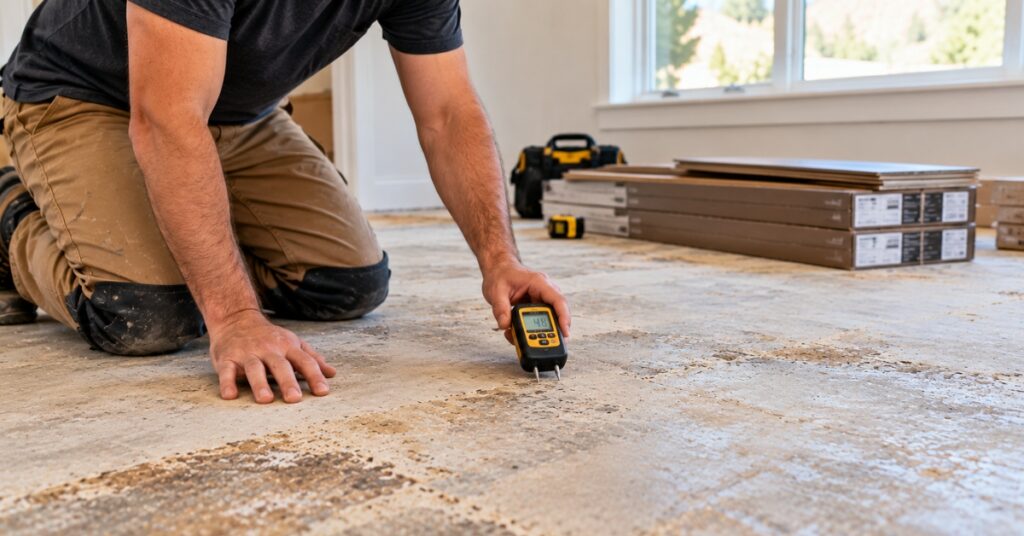
Visible staining does not automatically tell an installer how much moisture is present. Depending on the flooring system, moisture testing may be appropriate before installation.
When a Moisture Barrier May Be Needed
Some flooring systems require or benefit from a moisture barrier or other moisture-control product between the substrate and finished flooring.
The exact requirements depend on several factors, including:
- The type of subfloor or slab
- The flooring manufacturer’s installation requirements
- Whether the flooring is glued, floated, or mechanically fastened
- Moisture test results
- The location and conditions of the room
A moisture barrier should not simply be treated as an automatic solution to every moisture concern. Active leaks, drainage problems, or other sources of unwanted water should be identified and corrected rather than concealed beneath new flooring.
Damaged Subfloors Need Attention Before Installation
Once the existing floor is removed, installers may find areas that are cracked, loose, deteriorated, or otherwise unsuitable for immediate installation.
Wood subfloors may have damaged panels, loose fasteners, squeaks, swollen areas, or weakened sections. Concrete can have cracks, spalling, damaged patches, or irregular transitions.
Some conditions require only localized repairs. Others can indicate a larger problem that should be investigated before the flooring project continues.
Installing finished flooring over unstable material can transfer the underlying problem to the new surface. Movement below the flooring may eventually become visible or noticeable above it.
When Underlayment Helps
Underlayment is sometimes confused with subfloor preparation, but the two are not interchangeable.
Preparation involves creating a suitable surface for installation. Underlayment is a separate material installed between the subfloor and finished flooring when the flooring system calls for it.
Depending on the product, underlayment may help with sound reduction, minor surface irregularities, cushioning, moisture management, or installation requirements.
It cannot necessarily correct significant structural problems or major variations in the substrate. A severely uneven floor still needs appropriate correction rather than simply being covered with thicker underlayment.
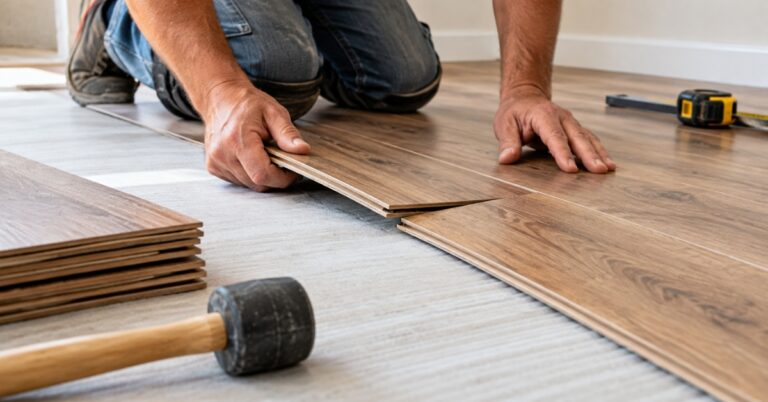
Homeowners considering different flooring installation services should therefore look at the complete installation system, not only the visible flooring product.
Floor Flatness Can Affect the Finished Appearance
A flooring product can only hide so much.
With large-format tile, irregularities in the substrate can contribute to uneven tile edges. With plank flooring, variations may create movement or areas that feel different underfoot. Certain glued flooring products can reveal imperfections beneath the surface.
Preparation becomes particularly important when changing flooring types.
For example, the substrate left behind after tile removal may require different preparation before luxury vinyl plank than it did for the original tile. Likewise, replacing carpet with a harder surface can make imperfections noticeable that were previously hidden beneath carpet and padding.
The requirements of the new material should guide the preparation process.
Why Prep Can Change Installation Cost
Homeowners sometimes wonder why flooring installation cost changes after the existing material is removed.
The answer is often hidden conditions.
A contractor can inspect visible surfaces before work begins, but existing flooring limits what can be evaluated. Once demolition exposes the substrate, the actual condition becomes much clearer.
Additional costs may come from:
- Grinding or removing adhesive residue
- Patching cracks or damaged areas
- Correcting significant low or high spots
- Replacing damaged sections of wood subfloor
- Applying moisture-control products
- Installing required underlayment
- Additional labor and materials
This does not mean every flooring project will require extensive preparation. Many need only routine work. However, allowing for the possibility of additional preparation can make budgeting more realistic.
Subfloor Conditions Can Affect the Project Schedule
Preparation can also influence how quickly a flooring project moves from demolition to finished installation.
Some corrections can be completed relatively quickly. Others involve materials that require curing or drying time before the next step can begin.
For example, a leveling compound may need to reach the appropriate condition before flooring is installed. Moisture concerns may require testing or mitigation. Damaged wood may need replacement. Extensive adhesive removal can add labor to the schedule.
Because these conditions may remain hidden until demolition, a flooring contractor may provide an expected schedule while explaining that unexpected substrate conditions could affect the timeline.
Building some flexibility into the project can help prevent homeowners from feeling caught off guard if additional preparation becomes necessary.
Preparation Should Match the Flooring Being Installed
There is no single preparation process that works for every floor.
Tile, hardwood, engineered wood, laminate, luxury vinyl, and other products can have different substrate requirements. Installation methods also matter.
A floating floor has different considerations than a glue-down product. Tile has specific requirements for substrate stability and flatness. Adhesive manufacturers may specify acceptable substrate conditions and moisture levels.
This is why preparation should be planned around the selected flooring system rather than treated as a generic step.
The goal is not to make the subfloor look perfect. The goal is to create conditions that meet the requirements of the finished flooring and installation method.
What Homeowners Can Ask Before Work Begins
A few questions can make conversations about flooring preparation much clearer.
Ask what the contractor can evaluate before removal and what cannot be confirmed until the old flooring comes up. Find out whether floor leveling, moisture testing, underlayment, or adhesive removal might be necessary for the flooring you selected.
It can also help to ask how unexpected preparation work is handled. Will the contractor stop and discuss additional work before proceeding? Are preparation costs included in the original estimate, provided as allowances, or priced after demolition?
Clear expectations are particularly useful when remodeling older homes or replacing flooring that has been in place for many years.
A Better Floor Starts Below the Surface
The flooring homeowners see at the end of a project is only one part of the installation.
Subfloor preparation helps create the stable, clean, appropriately flat surface that the finished flooring depends on. Addressing moisture concerns, residue, damaged sections, and irregularities before installation can reduce the likelihood of problems appearing later.
It can also explain why two rooms with the same flooring product may have different installation costs or timelines. One may require minimal preparation, while another needs several corrective steps before installation can begin.
Paying attention to what is underneath the floor helps protect the investment being made in what goes on top.
Frequently Asked Questions
Does every new floor require subfloor preparation?
Some degree of preparation is usually involved, but the amount varies. A clean, stable, sufficiently flat substrate may need very little work, while damaged or uneven surfaces may require more extensive correction.
Does a subfloor need to be perfectly level?
Not necessarily. Flatness is often more important than being perfectly level. Flooring manufacturers commonly specify acceptable tolerances, and installers should evaluate the substrate according to the product being used.
Can underlayment fix an uneven floor?
Underlayment may help with minor irregularities depending on the product, but it is not a substitute for correcting significant high spots, low spots, damage, or structural movement.
What happens if old flooring adhesive remains?
The appropriate response depends on the adhesive, substrate, and new flooring system. Some residue may need to be removed, reduced, or otherwise treated so it does not interfere with installation.
Can moisture underneath flooring cause problems?
Yes. Excess moisture can affect certain flooring materials, adhesives, and installation systems. Testing or moisture-control measures may be recommended depending on the substrate and flooring product.
Why can’t all preparation costs be quoted before flooring removal?
Some conditions are hidden beneath the existing floor. Adhesive buildup, damaged substrate, cracks, moisture concerns, and significant variations may not become visible until demolition is complete.
How much time can subfloor preparation add to a flooring project?
It depends on what is found. Minor cleaning or patching may add little time, while extensive leveling, repairs, moisture mitigation, or products requiring curing time can extend the schedule.